




Moisture problems damage buildings slowly but consistently. High humidity weakens structures, damages finishes, and supports mold growth. Portable solutions often fail to control moisture across large spaces. For long-term control, a ducted dehumidifier provides stable humidity management.
A central dehumidification system works quietly in the background. It manages moisture evenly without disrupting daily indoor activities. Proper dehumidifier ducting ensures balanced airflow and effective moisture removal. This guide breaks down how ducted dehumidifiers work and how they integrate into real HVAC systems.
What Is a Ducted Dehumidifier?
How a Ducted Dehumidifier Works
A ducted dehumidifier connects directly to an air duct network. It removes moisture from the air before redistributing dry air. The system operates independently or alongside HVAC equipment.
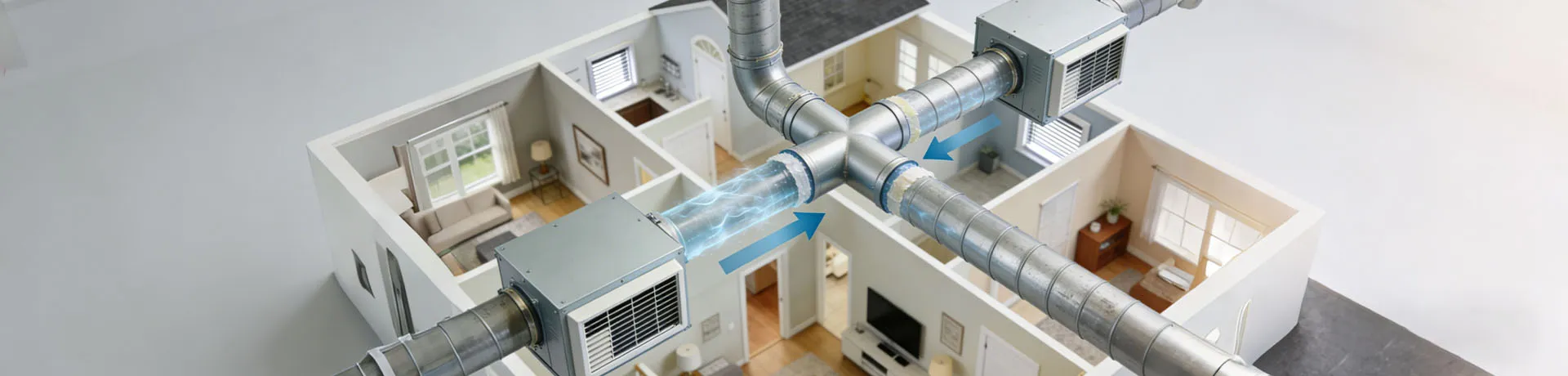
Humid air enters through return ducts. Moisture condenses on internal coils and drains safely away. Dry air then flows back through supply ducts into occupied spaces. This process maintains stable indoor humidity throughout the building.
Ducted vs. Portable Dehumidifiers: Key Differences
Many homeowners start with portable units, but their limitations become obvious in larger or sealed spaces. Their airflow capacity remains limited by small internal fans. They struggle in basements, large homes, and sealed buildings. In contrast, a ducted dehumidifier, sometimes called a duct dehumidifier, treats multiple rooms simultaneously. It supports higher airflow and continuous operation. Noise remains isolated from living and working areas.
How Dehumidifier Ducting Controls Moisture through HVAC Systems
The real advantage of ducted systems is how dehumidifier ducting distributes dry air evenly across zones. It prevents moisture building in hidden or low airflow areas. Balanced humidity improves indoor air comfort and air quality.
When integrated properly, HVAC systems operate more efficiently, demonstrating effective HVAC dehumidifier integration. Cooling equipment runs shorter cycles and consumes less energy.
When a Duct Dehumidifier Is the Right Choice for Your Space
At this point, a ducted system becomes the right choice for homes with recurring humidity problems. Basements, crawl spaces, and multi-level buildings benefit most. They also perform well in sealed or energy-efficient structures. If portable units run constantly, capacity is insufficient.
Key Components of Dehumidifier Ducting Systems
Strong ducting ensures reliable performance. Key parts include sealed connections and proper drains, as reliability depends on using the right ducting materials.
Supply and Return Air Duct Connections
Supply ducts carry dry air back to the room, while return ducts bring moist air to the unit. Use 10-inch round ducts for best flow. Seal joints with mastic to stop leaks and keep the pressure steady.

Intake & Exhaust Duct Placement
Place intake ducts near moisture sources like bathrooms and exhaust them into main supply lines. Keep runs short to avoid airflow loss. Position the unit in a utility room for easy access.
Drainage and Condensate Management in Ducted Systems
Collect water in the drain pan and route it steadily to a floor drain using PVC pipe. For any upward slope, a condensate pump is essential. Always include a trap in the line to block sewer gases from entering the system.
How to Incorporate a Dehumidifier into Existing Ductwork
Once the components are defined, installing a dehumidifier into existing ductwork requires precise planning. Follow all safety and building codes. For any electrical or complex duct modifications, hire a qualified professional.
Connecting a Ducted Dehumidifier to HVAC Supply Lines
Make a clean cut into the main supply duct after the coil. Install a wye fitting to add the dry air. Connect the return before your main air filter, then test for balanced airflow.
Independent Dehumidifier Ducting vs Shared HVAC Ducting
Before final installation, one key design decision is choosing independent ducting. Independent ducts avoid HVAC interference, while shared ducting saves space but risks pressure drops. In retrofit, the dedicated approach is usually best.
Airflow Balancing and Static Pressure Considerations
Measure static pressure with a manometer. Keep it under 0.5 inches of water column. Adjust the duct dampers to balance the airflow. High pressure overworks the fan and wastes energy.
Whole House Dehumidifier Ducting Layouts
After selecting the ducting approach, the layout determines how effectively dry air reaches each space, making whole house dehumidifier ducting essential for consistent humidity control. Layout design depends on structure size and layout. No single design fits every building.
Centralized Whole House Dehumidifier Ducting Design
For a centralized system, install the dehumidifier near your HVAC’s air handler. Run a main return duct from central hallways, then branch supplies to each zone. This design uses short, efficient duct runs to distribute dry air evenly.
Zoning Strategies for Multi-Level Homes
In multi-level homes, zone your ducting by floor to trap moisture. Use motorized dampers controlled by separate sensors to isolate damp areas like the basement. This targeted approach saves energy by not over-drying upstairs.
Whole House Dehumidifier Ducting for New Construction vs Retrofits
New construction allows for optimal, straight duct runs inside walls. Retrofits typically rely on flexible ductwork routed through the attic, requiring careful planning and access panels for future service.
Ducted Dehumidifier for Basement and Crawl Space Applications
Basements and crawl spaces require special ducted dehumidifier designs because they trap moisture easily. Ground contact and limited airflow worsen these conditions. A ducted setup isolates and dries these areas and protects foundations from cracks, highlighting the importance of basement dehumidifier ducting.
Basement-Only Ducted Dehumidifier Setup
A basement-only system tackles humidity at its source. Install the unit in a corner, draw airflow from a low grate, and exhaust dry air through a ceiling vent. Sealing the basement space keeps damp air from migrating upstairs, protecting your home’s structure and air quality.
Isolating Basement Moisture from Living Areas
To fully isolate the basement, install a backdraft damper on the supply line to prevent moist air from rising. Use insulated ducts to maintain cooler temperatures below, and ensure proper pressure balancing to keep humidity contained.
Duct Routing Challenges in Low-Clearance Spaces
In tight spaces, flexible ducts are essential but require care. Avoid sharp bends that restrict airflow and support the runs properly. These low-clearance installations demand a compact, powerful dehumidifier with high static pressure capability.

Installation Mistakes That Kill Performance (And How to Avoid Them)
Poor installation wastes money and fails fast. Spot common errors early to prevent long-term problems.
Undersized or Poorly Sealed Dehumidifier Ducting
Small ducts restrict airflow and overwork the unit. Use at least an 8-inch diameter for 200 CFM. Seal all seams with foil tape because leaks waste energy and reduce capacity.
Incorrect Return Air Placement
Never place return ducts near your supply vents. This mistake recycles dry air, crippling efficiency. Instead, position returns in the most humid zones to actively pull in moist air, dramatically improving the system’s moisture removal.
Ignoring Airflow Requirements of Ducted Dehumidifiers
Always match the dehumidifier’s airflow (CFM) to your duct length and avoid restrictive filters. Ignoring these specs causes underperformance, leaves rooms damp, and strains the unit. Following the manufacturer’s guidelines is essential for longevity and efficiency.
Why AlorAir Ducted Whole House Dehumidifiers Are Built for Ducting Systems
AlorAir builds units for easy duct integration. The Sentinel series fits tough setups well. Their construction is designed for long-term operation.
- High Static Pressure Capability for Long Duct Runs: Sentinel models handle 0.8 inches of static pressure. This works for ducts over 50 feet long. They move air through turns without problems.
- SLGR Technology for Energy-Efficient Ducted Dehumidification: SLGR removes more water with less power. It achieves 3.7 L/kWh efficiency. This lowers energy costs in duct systems.
Ideal AlorAir Models for Whole House and Basement Ducting
Model | Coverage (sq. ft.) | Pints/Day (AHAM 80°F/60% RH) | Ideal Applications | Ducting Notes |
2,300 | 90 | Small homes, basements, crawl spaces | Flexible forward/rear or up airflow; duct to multiple rooms | |
3,000 | 104 | Basements, whole homes, garages | Multiple mounting options; duct for multi-room coverage | |
3,500 | 140 | Whole homes, basements, commercial | Integrates with ERVs/HRVs; adjustable inlets/outlets for DIY ducting | |
4,500 | 165 | Large homes, basements, warehouses | Versatile configurations; multi-room ducting |
Uncontrolled humidity damages buildings and increases maintenance costs. A properly ducted dehumidifier prevents long-term moisture issues. AlorAir systems are built for continuous operation and duct integration. Choose the right solution before moisture damage becomes permanent.
