
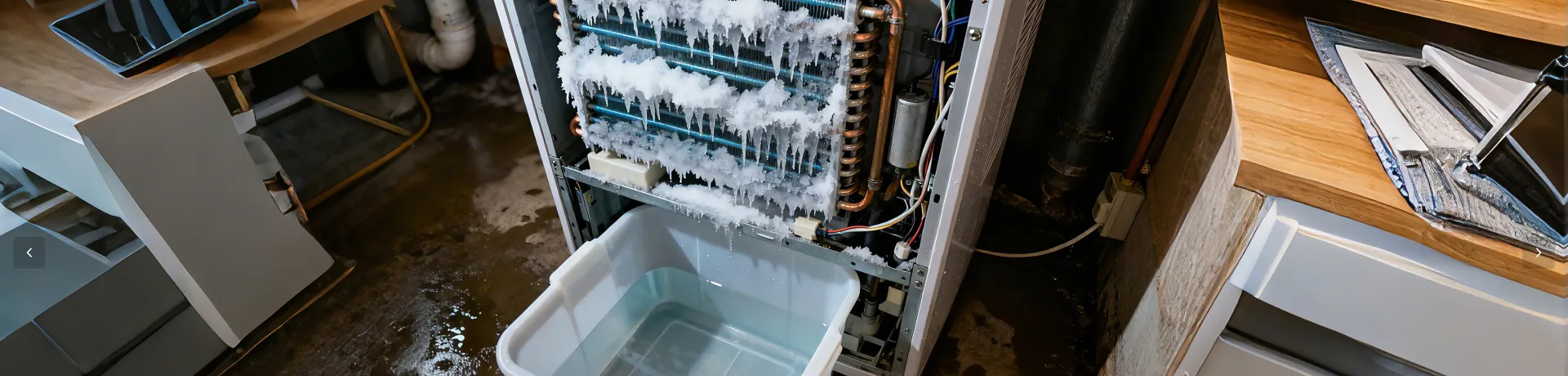






Many homeowners don’t realize that a simple sign—like frost on the coils or an empty water tank—can point to a serious humidity control problem. Seeing ice on your dehumidifier isn’t just an annoyance; it’s a red flag that performance is dropping and moisture is climbing back into your air. Below, we’ll break down exactly why dehumidifiers freeze up, how to fix it quickly, and, most importantly, how to stop it for good.
Spotting Early Signs of a Freezing Dehumidifier
The clearest warning is finding little or no water in the collection bucket, even when the room still feels damp. This often means your dehumidifier is freezing up internally, even if you can’t see the ice yet. Frost forms on the evaporator coils, blocking moisture from condensing and dripping away. You might also hear the fan straining or notice the unit cycling on and off more frequently. This issue is especially common in basements during colder months, where lower temperatures make dehumidifier freezing far more likely. Be on the lookout for a white, frosty coating on the coils or vents, or a stream of unusually cold air from the exhaust.
How Ice Buildup Sabotages Your Home
When there’s ice on dehumidifier coils, moist air can’t pass through them properly. Humidity rises unchecked, creating a perfect breeding ground for mold on walls, floors, and belongings. Beyond air quality, the ice itself stresses the compressor, drives up your energy bills, and can significantly shorten the appliance’s lifespan. Understanding this damage makes it clear why preventing freeze-ups is critical.
Top Reasons Your Dehumidifier Frosts Up
Several factors can lead to dehumidifier frosting up, but temperature is the prime culprit. When room temperatures dip below 65°F (18°C), moisture can freeze on the coils instead of dripping into the tank. Blocked air vents can trap cold air around the unit, and low refrigerant levels can cause the coils to overcool. Why does my dehumidifier freeze up in the basement? Simply put, these spaces are often cooler and damper, creating the ideal conditions for ice to form, especially if the unit isn’t designed for low-temperature operation.
The Basement & Low-Temperature Problem
Basements frequently sit between 50–60°F, dramatically increasing the risk of dehumidifier freezing in the basement. In these conditions, the coils can drop below freezing. Standard models lack the safeguards for this, and persistent ground moisture only accelerates ice buildup. The solution often involves using a specialized low-temperature model or strategically placing the unit closer to a warmer air source. Remember, cold isn’t the only enemy—poor airflow from neglected components can cause identical icing issues.
Dirty Filters and Coils: A Silent Culprit
A layer of dust on filters and coils is a common but overlooked reason a dehumidifier ices up. Clogged filters restrict airflow, causing the coils to chill unevenly and promoting frost. This frost then further blocks performance and strains the motor. A simple habit of cleaning the filter monthly and gently brushing off the coils can keep your unit running efficiently, maintain balanced humidity, and protect your home.
Quick Steps to Thaw a Frozen Dehumidifier
If you find your dehumidifier frozen, act quickly. First, unplug it to stop operation and let the ice melt naturally in a warmer spot. Always empty the water tank first to prevent spills. Placing a fan nearby can speed up melting—avoid using direct heat like hair dryers, which can damage plastic parts. Once thawed, run the unit on a high fan setting for an hour to dry internal components. This process often answers the question, “why would a dehumidifier freeze?” and can prevent more costly repairs.

Proven Strategies to Prevent Dehumidifier Icing Up
Stopping dehumidifier icing up starts with consistent, simple care. Check and clean filters and vents weekly. Keep your target humidity set between 40–50% to avoid making the unit work too hard in already cold, dry conditions. Elevate the appliance slightly off cold basement floors for better air circulation. In chronically cold spaces, using a small space heater nearby can make a big difference. A digital hygrometer is a wise investment to monitor conditions and act before frost forms.
Best Placement and Settings to Avoid Frost
Where you put your dehumidifier matters. Place it in the center of the room, at least six inches from walls, for even airflow. If your model has one, use the auto-defrost feature. Aim for a humidity setting around 45%. Avoid placing the unit directly on cold concrete—use a sturdy stand or pad. In basements, try to aim the warm exhaust air toward the unit to create a slightly warmer microclimate and improve efficiency.
Choosing a Dehumidifier Built for Cold Spaces
If your dehumidifier keeps freezing up, it may be a sign you need a model designed for the job. When choosing a unit for cold areas like basements, look for:
- Low-Temperature Operation: Models rated to work efficiently at or near 33°F (0.5°C).
- Auto-Defrost: This feature automatically cycles to melt coil frost without shutting down.
- Robust Capacity: A strong compressor that can remove moisture effectively even in cool, damp conditions.
- Smart Features: Built-in humidity sensors and pumps for continuous drainage.
This is where professional-grade units truly differentiate themselves. Standard residential models often fail in cold basements, while purpose-built systems are engineered for reliable, ice-free operation.

Why AlorAir Units Are Engineered to Reduce Freezing
AlorAir dehumidifiers tackle the root causes of freeze-ups head-on. They utilize reliable R32 refrigerant and are equipped with advanced auto-defrost systems and built-in sensors specifically designed to prevent dehumidifier icing up in challenging cold spaces. Technologies like the SLGR (Super Low Grain Refrigerant) system in our commercial-grade models ensure powerful, consistent airflow. This maintains coil temperatures above freezing, which can reduce ice formation by up to 50% compared to conventional units. Combined with features like Energy Star efficiency for lower operating costs, built-in condensate pumps, and industry-leading 5-year warranties, AlorAir units provide a durable, long-term solution for moisture control in low-temperature environments.
Top AlorAir Models to Consider for Ice-Prone Areas
- Sentinel WHD 100 Whole Home Dehumidifier: This compact yet powerful unit is ideal for smaller basements or apartments (up to ~2,300 sq. ft.). Its R32 refrigerant, automatic defrost cycle, and smart humidity sensors work together to reduce dehumidifier icing up effectively. It’s energy-efficient and straightforward to install, offering a robust defense against dampness and frost.
- Sentinel SLGR 1400X Commercial Dehumidifier: For large, demanding spaces like big basements, warehouses, or post-flood restoration sites, this heavy-duty model delivers. With 440 CFM of airflow and advanced defrost technology, it’s built to cut ice buildup and maintain powerful moisture removal even in cold, humid conditions where other units would fail.
Conclusion: Don’t Let Freezing Compromise Your Comfort
Dehumidifier icing is more than a minor hiccup—it’s a clear signal that your appliance and your environment are mismatched. Left unaddressed, it compromises your home’s air quality, energy efficiency, and the longevity of your equipment.
If your dehumidifier is freezing up despite your best maintenance efforts, it may be time to upgrade to a system designed for the challenge. AlorAir dehumidifiers are engineered specifically for reliable, low-temperature operation, providing consistent performance where standard models falter.
Ready to solve your freezing dehumidifier problem for good?
Explore AlorAir’s range of low-temperature dehumidifiers to find the right model for your space, or contact our experts for a personalized recommendation to keep your home dry, healthy, and ice-free year-round.
